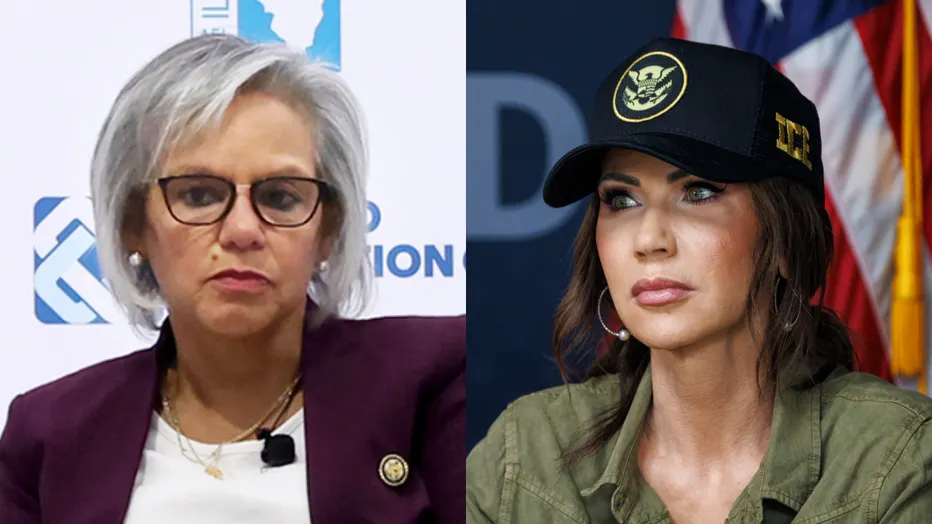
In the aftermath of the killing of Renee Nicole Good, Representative Robin Kelly has taken a step many expected to be dismissed as symbolic: she announced three articles of impeachment against Homeland Security Secretary Kristi Noem. Critics were quick to wave it off. With Republicans controlling both chambers of Congress, impeachment is portrayed as futile—an emotional gesture rather than a meaningful political act.
Yet that reaction misses the larger point.
A congresswoman has called for the impeachment of Kristi Noem—and she has good reason
This administration has operated under a consistent and dangerous assumption: that loyalty to power guarantees immunity from consequences. If Democrats respond only with silence or resignation, that assumption hardens into precedent. Impeachment, even when conviction is unlikely, is one of the few tools capable of interrupting that narrative. It forces attention, slows the political churn, and makes wrongdoing harder to bury beneath the next scandal.
In an era where controversies pile up faster than the public can process them, formal impeachment proceedings compel focus. They create a record. They demand answers. And they make it clear that abuses of power are not simply absorbed as the cost of doing politics.
Compassion Should Come First—But Truth Still Matters
There is something deeply uncomfortable about discussing strategy in the wake of a senseless death. What happened in Minneapolis should first and foremost be met with empathy, grief, and basic human decency. On that count, the administration’s defenders failed almost immediately.
Rather than showing restraint, prominent allies rushed to television studios to distort the facts, attack Renee Good’s character, and shift blame onto the victim. In doing so, they sent a chilling message: those who are seen as obstacles to the administration’s agenda can be stripped of sympathy, dignity, and even legal protection.
The repeated suggestion that individuals can be branded “domestic terrorists” at will—and treated as if the law no longer applies to them—has consequences far beyond a single case.
The Normalization of Impunity
Few figures illustrated this rot more starkly than JD Vance, who falsely claimed that ICE officers possess “absolute immunity.” Statements like this are not just inaccurate; they are signals. They tell citizens that if power is abused, there is no remedy—and no point in seeking one.
History shows that lies, when left unanswered, metastasize. The ongoing revisionism surrounding January 6 is proof enough. Falsehoods become loyalty tests, repeated until dissent itself is framed as betrayal. Impeachment is one of the rare mechanisms that can interrupt that process by anchoring events to documented facts.
Representative Kelly has made clear that her articles of impeachment address three core charges: deliberate obstruction of congressional oversight, direction of unconstitutional actions, and abuse of office for personal gain. Together, these allegations map the defining pattern of this administration.
Violence From the Top Down
From the earliest decisions—such as pardoning violent insurrectionists—the message has been unmistakable: those who act in service of Trump’s interests, whether political or financial, will be protected. While not every ICE agent engages in brutality, the sheer volume of documented abuses points to something systemic.
This culture is reinforced, not discouraged, by official messaging. The Department of Homeland Security’s advertising campaigns, steeped in dehumanization and even extremist imagery, are not meaningless aesthetics. They shape behavior. When state power is framed as spectacle and domination, it should surprise no one when agents begin to act with unchecked cruelty.
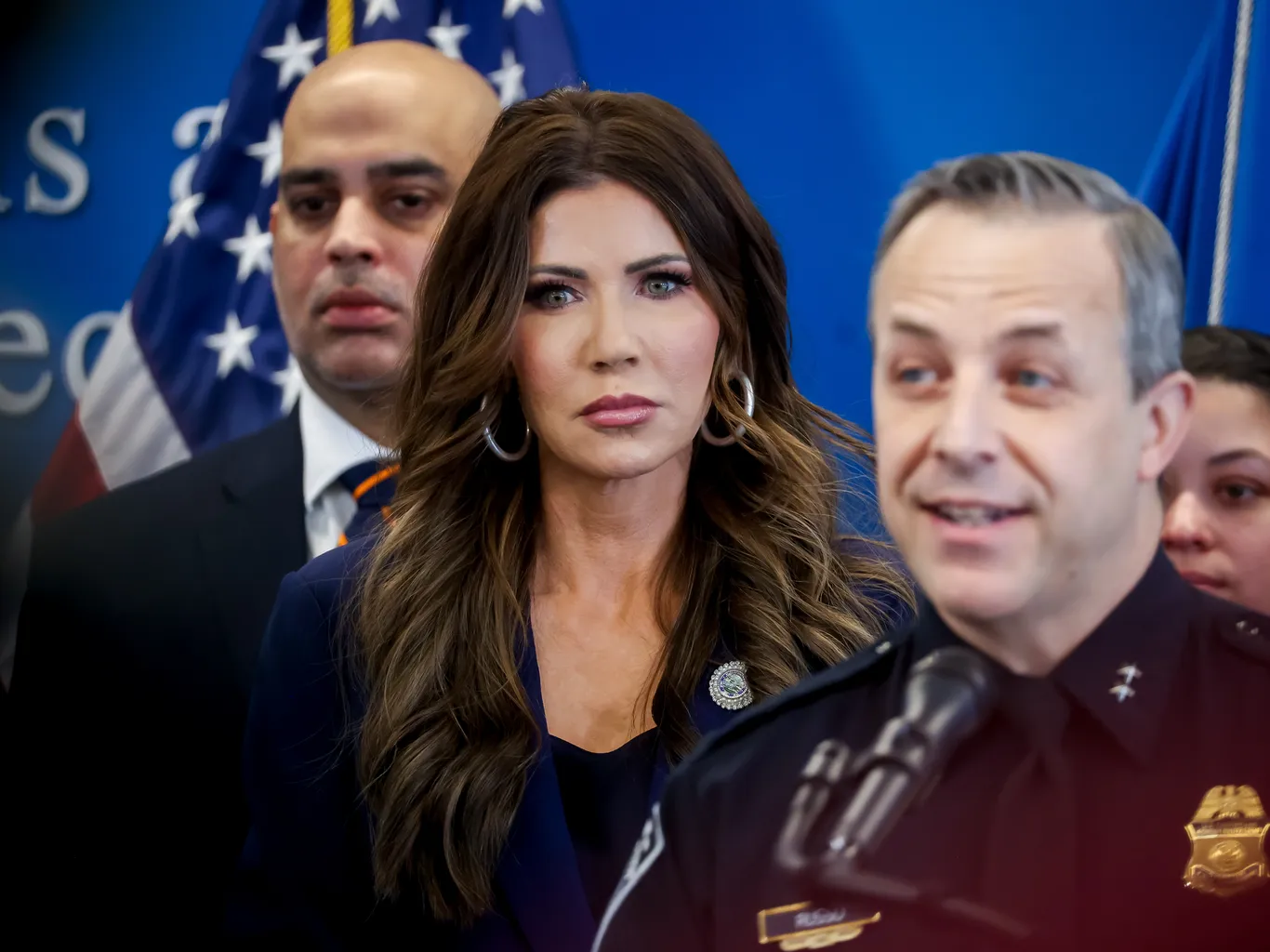
Fear, Corruption, and the Logic of Strongmen
As political power weakens, authoritarian movements often compensate with intimidation. Spectacular acts of violence, followed by denial and mockery of victims, become tools of control. From aggressive operations abroad to militarized displays near schools, the message is simple: power is arbitrary, and resistance is dangerous.
The allegations of corruption against Noem matter in this context. Lawlessness does not stop at repression—it creates fertile ground for self-enrichment. When accountability disappears, so do the limits on personal gain.
Ironically, history shows that even aspiring autocrats understand the need for occasional restraint. Maintaining the appearance of legality helps consolidate power. What we are witnessing instead is a form of cruelty so performative that it serves only the most radical corners of the political base.
Why Opposition Still Matters
Some fear that pursuing accountability will only provoke further escalation, even threats to free and fair elections. That concern is not irrational. But surrendering accountability altogether guarantees something worse: permanent imbalance, where one side governs without consequence and the other merely reacts.
A functioning opposition does more than object—it frames reality. Republicans understood this when they impeached former Homeland Security Secretary Alejandro Mayorkas. Though unsuccessful, the effort cemented a narrative of crisis that shaped public debate.
Democrats now face a similar choice. They can force their opponents to go on record. They can make the public confront specific, undeniable moments: the killing of a mother of three; an officer walking away without urgency; medical aid denied; memorial candles kicked aside with contempt.