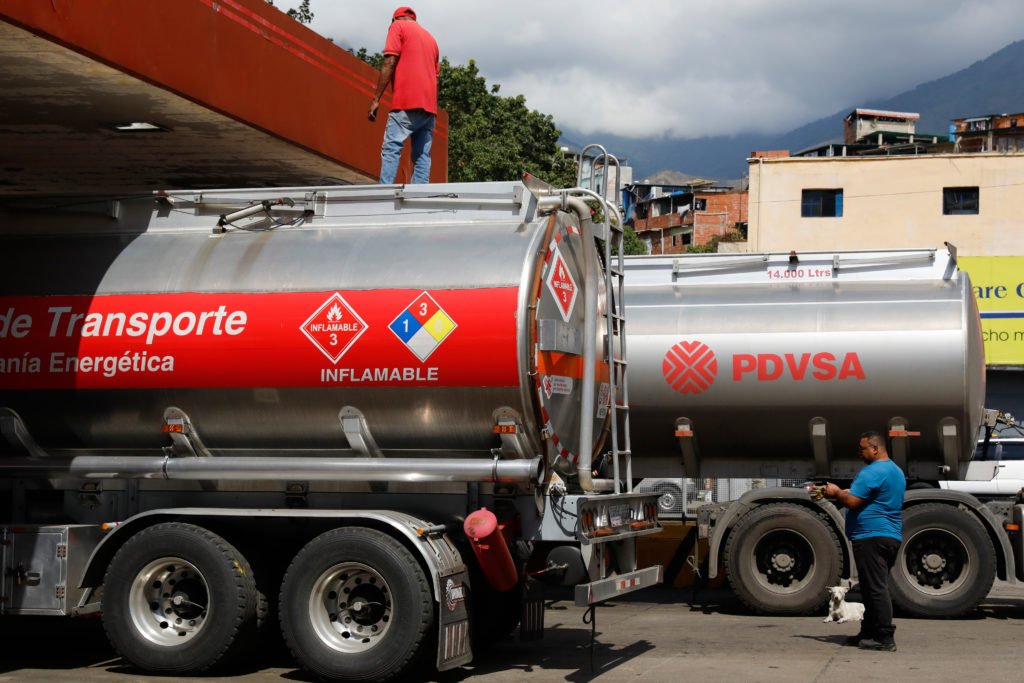
New economic research makes a clear and compelling case: the United States stands to gain far more by allowing Venezuelan immigrants to remain and work legally than by attempting to profit from Venezuela’s oil reserves. This conclusion challenges the Trump administration’s approach, which has prioritized deporting more than 600,000 Venezuelans while exploring ways to seize and sell Venezuelan oil on global markets. In today’s economy, experts argue, national wealth is driven less by natural resources and more by people, skills, and innovation.
According to a detailed analysis by the National Foundation for American Policy (NFAP), allowing Venezuelans in the United States under Temporary Protected Status (TPS) to stay would deliver significantly greater economic benefits than any revenue generated from Venezuelan oil sales. The report underscores a broader truth about modern economies: human capital consistently outperforms extractive assets in long-term value creation.
Immigrants vs. Oil: The Economic Math
The NFAP study estimates that keeping approximately 616,000 Venezuelans currently living in the U.S. under TPS would have a measurable fiscal impact. In 2026 alone, their continued presence would reduce the federal deficit by $4.5 billion while boosting U.S. Gross Domestic Product by $40.5 billion. Over a three-year period through 2028, the cumulative effect would amount to a $16.3 billion reduction in the deficit and a $128.3 billion increase in GDP.
Looking further ahead, the numbers grow even more striking. Over a decade, Venezuelans remaining in the U.S. under TPS would lower the federal deficit by an estimated $70.9 billion and add $504.4 billion to GDP. By comparison, the value of roughly 50 million barrels of Venezuelan oil—often cited as a potential windfall—comes to about $2.8 billion. Even that figure is uncertain, as it remains unclear how much revenue would actually flow to U.S. taxpayers or meaningfully contribute to economic growth.
What Ending TPS Would Cost the U.S.
Temporary Protected Status allows eligible immigrants to live and work legally in the United States without fear of deportation. In 2025, the Department of Homeland Security, under Secretary Kristi Noem, ended TPS for about 616,000 Venezuelans, citing claims of improved conditions in Venezuela following the removal of Nicolás Maduro.
However, reports from international media suggest that political instability persists, with individuals who supported Maduro’s removal facing targeting and no clear plans for new elections. Against this backdrop, ending TPS would mean the U.S. economy losing hundreds of thousands of active workers.
NFAP’s analysis assumes that around 400,000 Venezuelans under TPS participate in the U.S. labor force. Their removal would not only shrink the workforce but also reduce tax revenues and disrupt businesses that rely on their labor.

“Economies don’t function in isolation,” explained labor economist Mark Regets, a senior fellow at NFAP. “Workers generate value far beyond their paychecks. They support businesses, pay taxes, and increase productivity through diverse skills. That interconnected impact is what drives real economic growth.”
Skepticism Around Venezuela’s Oil Windfall
Many economists remain unconvinced that monetizing Venezuela’s oil would benefit the United States. Catherine Rampell, economics editor at The Bulwark, has argued that the plan is unlikely to deliver meaningful gains for American taxpayers or companies. The U.S. is already producing oil at record levels, global markets are well supplied, and Venezuela’s oil is costly and difficult to extract. Add political instability and a history of expropriation, and the investment risks grow even higher.
An editorial in The Wall Street Journal echoed these concerns, warning that the administration’s rhetoric reinforces the perception that its Venezuela policy is driven primarily by oil interests. The piece also questioned whether oil revenues could be handled without proper congressional oversight.
Greg Ip, chief economics commentator at The Wall Street Journal, sees the fixation on oil as outdated. He argues that technology, services, and human capital have long surpassed natural resources as the engines of American prosperity. Examples like Alaska’s population decline and Greenland’s reliance on subsidies highlight the limits of resource-based wealth.
People Over Petroleum
While Venezuela’s oil may dominate headlines, economists emphasize that its people represent a far more durable asset. “The idea that people are more valuable than oil isn’t just a moral argument,” said Mark Regets. “It’s a hard economic fact.”
The evidence increasingly supports this view. By any serious measure of growth, fiscal health, or productivity, Why Venezuelan Immigrants Matter More to the U.S. Than Venezuela’s Oil is not just a provocative headline—it is an economic reality.