

Few modern leaders have shaped their country’s destiny as controversially as Nicolás Maduro. Rising from a working-class background to become the president of Venezuela, Maduro has remained at the center of global political debate for over a decade. His leadership is defined by loyalty from supporters, fierce opposition at home, and relentless scrutiny from the international community. Understanding nicolas maduro means understanding Venezuela’s political, economic, and social struggles in the 21st century.
Who Is Nicolás Maduro?
Born in Caracas in 1962, nicolas maduro began his career far from the halls of power. He worked as a bus driver and union organizer before entering politics through the labor movement. His rise was closely tied to the late Hugo Chávez, Venezuela’s charismatic former president. Chávez viewed Maduro as a trusted ally and appointed him foreign minister before naming him as his political successor.
When Chávez died in 2013, nicolas maduro narrowly won a special election, inheriting not only the presidency but also a deeply polarized nation and an economy already under strain.
The Ideology Behind Maduro’s Rule
At the core of nicolas maduro’s leadership is “Chavismo,” a political ideology rooted in socialism, state control of key industries, and anti-imperialist rhetoric. Maduro has consistently framed his presidency as a continuation of Chávez’s “Bolivarian Revolution,” positioning himself as a defender of national sovereignty against foreign interference.
Supporters argue that nicolas maduro stands up to global powers and protects Venezuela’s independence. Critics, however, say this ideology has been used to justify authoritarian practices and silence dissent.
Economic Crisis and Daily Life in Venezuela
One cannot discuss nicolas maduro without addressing Venezuela’s economic collapse. Once one of Latin America’s richest nations due to its vast oil reserves, Venezuela has experienced hyperinflation, widespread shortages of food and medicine, and mass migration.
Under nicolas maduro, the government blamed economic sanctions, falling oil prices, and sabotage by political opponents. While these factors played a role, economists also point to years of mismanagement, currency controls, and corruption. For ordinary citizens, the result has been a daily struggle to survive, with millions leaving the country in search of stability.
Political Opposition and Contested Elections
Elections under nicolas maduro have repeatedly been challenged by opposition groups and international observers. The 2018 presidential election, in particular, was widely criticized as unfair, leading several countries to refuse recognition of the results.
This political crisis deepened divisions within Venezuela. While Maduro retained control of state institutions and the military, opposition leaders accused him of clinging to power at the expense of democracy. Protests erupted multiple times, often met with force by security services loyal to nicolas maduro.
International Pressure and Global Isolation
Globally, nicolas maduro has become a symbol of diplomatic tension. The United States, European Union, and several Latin American nations imposed sanctions aimed at pressuring his government to restore democratic norms. Maduro, in response, strengthened ties with countries such as Russia, China, and Iran.
This geopolitical standoff has left Venezuela increasingly isolated from Western markets while relying on alternative alliances to survive. For nicolas maduro, international pressure has become both a challenge and a rallying point to consolidate domestic support.
Human Rights Concerns
Human rights organizations have raised serious concerns about nicolas maduro’s rule. Reports document alleged arbitrary arrests, suppression of free speech, and intimidation of journalists and political opponents. The government has consistently denied these accusations, calling them politically motivated attacks.
Regardless of perspective, the human rights debate remains central to how nicolas maduro is viewed globally, influencing sanctions, diplomatic relations, and Venezuela’s standing on the world stage.
Maduro’s Support Base: Why He Still Holds Power
Despite ongoing crises, nicolas maduro has managed to remain in power. Key reasons include loyalty from the military, control over state institutions, and continued support from segments of the population who fear instability or foreign intervention.
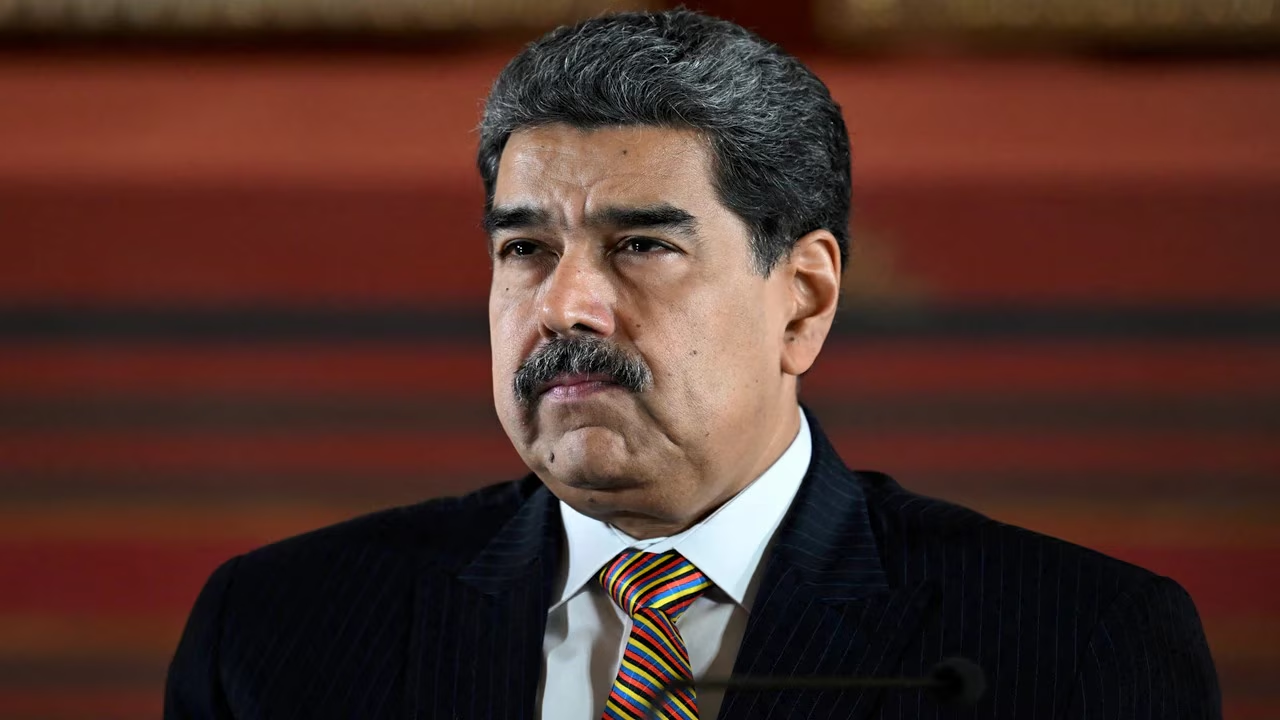
For some Venezuelans, nicolas maduro represents resistance against external domination. For others, he embodies the failures of an entrenched political system. This divide explains why his presidency endures despite intense opposition.
What Lies Ahead for Nicolás Maduro and Venezuela?
The future of nicolas maduro remains uncertain. Negotiations with opposition groups, shifting international strategies, and economic reforms could reshape Venezuela’s path. Yet, deep mistrust on all sides makes meaningful change difficult.
Whether nicolas maduro will be remembered as a resilient leader who defied global pressure or as a symbol of national decline depends on what happens next. For now, his presidency stands as one of the most consequential—and controversial—chapters in modern Latin American history.
Final Thoughts
The story of nicolas maduro is inseparable from the story of Venezuela itself: a nation rich in resources yet struggling under political conflict and economic hardship. As the world continues to watch, one thing is clear—his leadership will remain a defining force in shaping Venezuela’s future for years to come.

