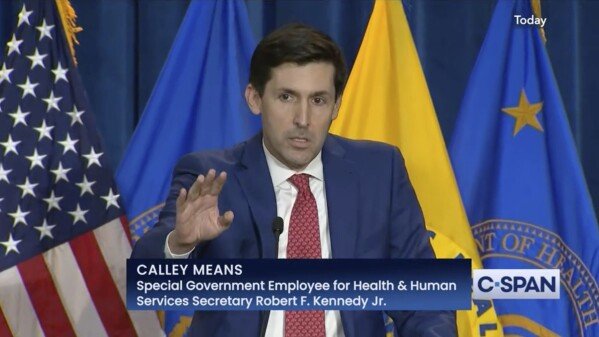
Calley Means has made a name for himself by loudly criticizing the U.S. health care system, often accusing doctors, federal agencies, and pharmaceutical companies of being driven by money rather than science. That outspoken approach helped propel him into a powerful role inside the White House. In March, Means became a top adviser to Health Secretary Robert F. Kennedy Jr., where he now shapes public messaging around health policy.
But while Means regularly calls out alleged conflicts of interest in traditional medicine, an Associated Press investigation shows he has financial interests of his own that are deeply connected to the booming wellness industry. These findings form the backbone of Key Insights From the AP Report on the Financial Ties of RFK Jr.’s Wellness Adviser, a closer look at how personal business interests and public policy may be overlapping.
A wellness entrepreneur inside the White House
Means is the co-founder of Truemed, an online platform that sells a wide range of wellness products, from supplements and herbal remedies to exercise equipment and light therapy devices. The company also helps users tap into health savings accounts (HSAs) to buy products that normally would not qualify as medical expenses, such as meal services and alternative remedies.
According to the AP, many of the vendors featured on Truemed are outspoken supporters of Kennedy’s “Make America Healthy Again” movement. That connection raises questions about whether Means’ political role is aligned too closely with his private business interests.
Because Means is classified as a temporary or “special” government employee, he is not required to publicly disclose his financial holdings. That exemption makes it difficult for the public to know the full scope of his ties to companies that could benefit from his policy positions.
Targeting prescription drugs while selling alternatives
One of Means’ most visible messages in government has been a push to reduce reliance on prescription drugs for issues like depression, weight loss, and other chronic conditions. He has promoted a new government report that urges pulling back on the use of these medications.
Health experts quoted by the AP argue that this approach conveniently aligns with Truemed’s business model, which profits from selling non-drug alternatives. Dr. Reshma Ramachandran of Yale University called the situation troubling, saying Means appears to be attacking regulated medicine while promoting a marketplace of loosely regulated wellness products that could enrich him.
Means, however, disputes that claim. He says his government work has focused on broad reforms such as improving nutrition programs and eliminating harmful food dyes, and that it has not touched on matters affecting Truemed.
Financial disclosures kept out of public view
The AP report highlights a major loophole in ethics rules for special government employees. Unlike senior officials, they do not have to divest from businesses that could be affected by their work, and their financial disclosure forms are not released publicly.
Richard Painter, who served as a White House ethics lawyer under President George W. Bush, described this as a serious weakness in the system. Without transparency, the public has no easy way to judge whether an adviser’s policy positions might be shaped by personal financial incentives.
Promoting friends, products, and personal brands
While acting as a public face for the administration’s health agenda, Means has also promoted products tied to his own business network. In podcast appearances, he has urged audiences to buy his book “Good Energy,” which he wrote with his sister, Dr. Casey Means. He has also recommended blood tests sold by Function Health, a company linked to one of Truemed’s investors.
Like many supplements and wellness tests, these products are not approved by the Food and Drug Administration. Critics say this blurs the line between public service and private promotion, especially when the endorsements come from someone with a government title.
Steering health dollars toward HSAs
Before joining the White House, Means was open about wanting to channel trillions of dollars in health spending into flexible accounts like HSAs. Truemed earns fees when users spend money through its platform, giving the company a direct financial stake in expanding those accounts.
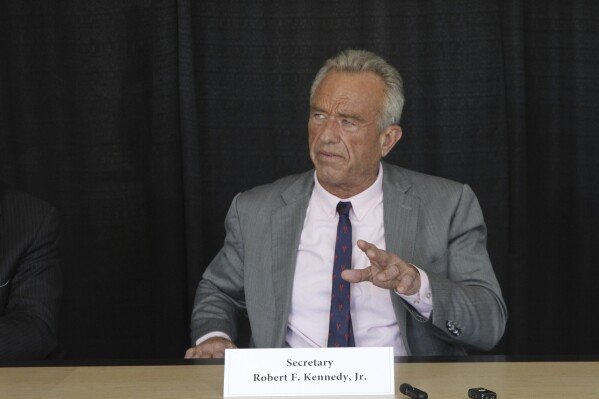
Means says he has not worked on HSA policy since entering government, but he previously founded a lobbying group of wellness entrepreneurs that listed HSA expansion as one of its goals. He later said the group focused only on general issues like patient choice rather than specific legislation.
Are HSAs really helping patients?
Economists have long questioned whether HSAs actually lower health care costs. While they offer tax advantages, they are mostly used by high-income Americans who can afford to contribute more. According to nonprofit research cited by the AP, people earning over $1 million a year are the most consistent HSA contributors, while many ordinary Americans have balances of just a few hundred dollars.
Proposed expansions of HSAs under former President Trump’s “One Big Beautiful Bill” are expected to cost the federal government $180 billion over the next decade, largely benefiting wealthier taxpayers rather than those struggling with medical bills.
Why the AP findings matter
At the center of Key Insights From the AP Report on the Financial Ties of RFK Jr.’s Wellness Adviser is a fundamental concern: when a senior health adviser has financial links to an industry he is actively promoting, public trust can erode. While Means argues he is focused on making America healthier, critics say the overlap between his policy advocacy and his business interests creates a troubling appearance of conflict.
The AP’s reporting does not accuse Means of breaking the law, but it does highlight how gaps in ethics rules allow influential figures to operate in ways that would be impossible for most high-level government officials. In an era when Americans are already skeptical of institutions, those unanswered questions may be just as damaging as any confirmed wrongdoing.