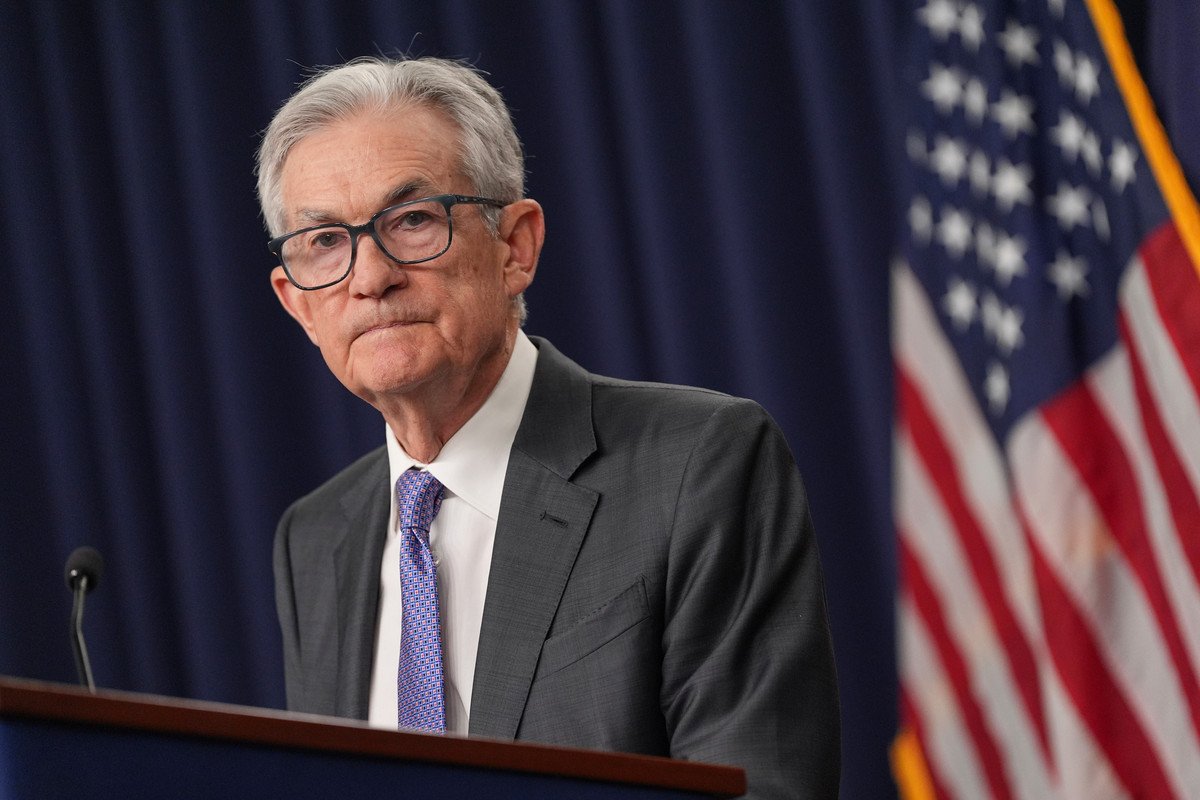
The political and financial worlds were jolted this week after news broke that The Justice Department has launched a probe into Jerome Powell as Trump intensifies his attacks on the Federal Reserve. The investigation marks a dramatic turning point in the long-running clash between former President Donald Trump and the U.S. central bank, raising serious questions about the future independence of America’s monetary system.
Why the Justice Department Is Investigating
According to Powell, federal prosecutors issued grand jury subpoenas to the Federal Reserve late last week. The move reportedly stems from his testimony before the Senate Banking Committee in June of last year, when lawmakers questioned him about the massive renovation project underway at the Fed’s historic headquarters in Washington, D.C.
The U.S. Attorney’s Office for the District of Columbia is now examining whether Powell misled Congress about the scale and cost of the renovations. Media reports say investigators are reviewing both Powell’s public statements and internal spending records connected to the project.
Trump allies had spent much of the previous year criticizing the renovation, calling it wasteful and mismanaged. Trump himself repeatedly hinted that legal action could follow, fueling speculation that the issue was becoming part of his broader political battle with the Fed.
A Political Fight Disguised as a Legal Case?
Powell has pushed back forcefully against the investigation, suggesting it is not simply about accounting or congressional testimony. Instead, he believes it is part of a campaign to punish the Fed for refusing to bend to political pressure.
In a strongly worded statement, Powell said he was being targeted because the central bank set interest rates “based on our best assessment of what will serve the public,” rather than following the wishes of the White House. He warned that the real issue at stake is whether monetary policy in the United States will be guided by economic data or by political intimidation.
That argument fits squarely into the larger narrative surrounding the case: The Justice Department has launched a probe into Jerome Powell as Trump intensifies his attacks on the Federal Reserve, turning what might have been a technical dispute into a full-blown institutional crisis.
Trump’s Long War With the Federal Reserve
Donald Trump has never hidden his frustration with Powell or the Fed. Throughout his presidency and after his return to office, he repeatedly criticized the central bank for not cutting interest rates fast enough to boost economic growth. In Trump’s view, lower rates would have helped fuel a booming economy and supported his promise of a “new golden age” for America.
However, Fed officials were wary. After the pandemic, inflation surged to levels not seen in decades, forcing the central bank to raise interest rates aggressively in 2022 and 2023. Even when inflation began to ease and rates started to fall, policymakers remained cautious. Trump’s unpredictable economic policies — including sweeping tariffs and trade disruptions — made them reluctant to slash rates quickly.
This cautious approach infuriated Trump, who accused Powell of undermining his economic agenda. Over time, those attacks escalated from angry tweets to concrete political actions.
Moves to Reshape the Fed
The investigation into Powell is only one piece of a broader effort by the Trump administration to reshape the Federal Reserve. A close Trump ally has already been installed on the Fed’s powerful board of governors, shifting the balance of influence inside the institution.
At the same time, the administration attempted to remove Lisa Cook, a Fed governor appointed by President Joe Biden, over unproven allegations of mortgage fraud. Critics saw the move as another attempt to weaken dissenting voices and bring the central bank more firmly under presidential control.
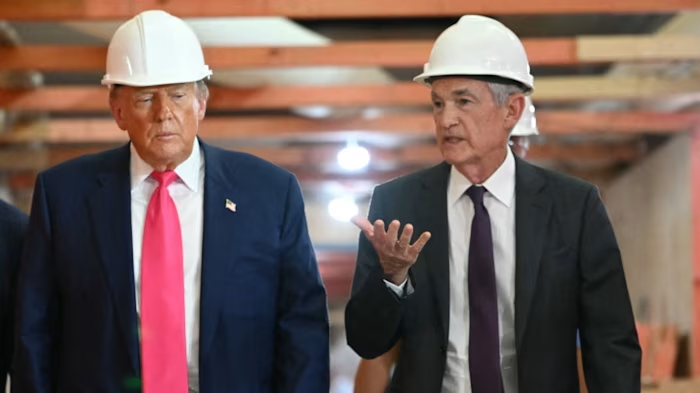
Against this backdrop, the Powell probe looks less like an isolated legal inquiry and more like part of a systematic effort to curb the Fed’s independence.
Powell’s Defense of Institutional Integrity
Powell, who was originally appointed by Trump and later reappointed by Biden, has been clear about where he stands. He says he respects the rule of law and believes that no public official is above it. But he also warned that the investigation should be viewed in context.
In his words, this is about whether the Federal Reserve will continue to set interest rates based on economic evidence, or whether it will be forced to bow to political pressure. He emphasized that he has served under both Republican and Democratic administrations and has always focused on the Fed’s dual mandate: price stability and maximum employment.
“Public service sometimes requires standing firm in the face of threats,” Powell said, vowing to continue performing his duties with integrity.
What Happens Next?
Powell’s term as Fed chair is set to expire in May, at which point Trump’s chosen successor could take over. However, Powell would still be able to remain on the board of governors until 2028, unless removed.
The Justice Department has not yet commented publicly, and the White House has referred all questions back to federal prosecutors. As investigators continue to review documents and testimony, the outcome remains uncertain.
What is clear, however, is that The Justice Department has launched a probe into Jerome Powell as Trump intensifies his attacks on the Federal Reserve, pushing a long-simmering conflict into dangerous new territory. Whether this ends in legal charges or not, the episode has already reignited a fierce debate about the independence of America’s central bank — and how far political power should be allowed to reach into the heart of the nation’s economic system.