For millennia, we’ve been taught that serious thinking depends primarily on abstract reasoning and analytical skills. Storytelling, in this traditional view, is secondary—a tool for communicating truths that rational analysis has already uncovered. Yet, as Angus Fletcher demonstrates in his book Storythinking: The New Science of Narrative Intelligence (2023), narrative plays a far larger and often decisive role in human thought and action than we have historically recognized. In fact, stories shape the way we think, imagine, and make decisions independently of purely analytical processes. This is the essence of The Surprising Influence of Narrative on Human Thought and Behavior.
Narrative as a Tool for Reasoning and Action
Fletcher introduces the concept of narrative-based reasoning—a process that relies on imagination, causal speculation, and shared story chains. These chains often lead to real-world actions, or occasionally, inaction. Across 200 pages, Storythinking blends neuroscience, philosophy, and literary analysis to make a compelling case: stories are not just decorative; they are essential tools for creativity, problem-solving, and human progress. In essence, storythinking may be as crucial to cognition as traditional analytical thinking.
Importantly, narrative thinking has historically guided breakthroughs and innovations. Charles Darwin’s theory of evolution, for example, emerged from a mind attuned to patterns, anomalies, and narrative coherence. Fletcher traces this lineage, showing that Aristotle, though brilliant in identifying narrative’s role in communication, ultimately downplayed its significance in reasoning, creating centuries of misunderstanding about storytelling’s cognitive power.
The Historical Undervaluing of Storytelling
For much of recorded history, narrative thinking was often dismissed as mere “storytelling.” Yet philosophers and scientists—including Hegel, John Eccles, Karl Popper, John Herschel, William James, and John Dewey—have all contributed insights into its pervasive role across human life. Fletcher explains, “Our synapses chain together individual actions into causal sequences, allowing our brain to improvise, test, and revise cognitive narratives.” Put simply, the majority of our practical thinking is inherently narrative.
Critical Gaps in Storythinking
While Fletcher’s work offers groundbreaking insights, it is not without its flaws.
Flaw #1: Neglect of “Stories in the Wild”
A major limitation is the book’s emphasis on deliberately crafted narratives over the “stories in the wild”—the spontaneous stories arising from real-life experience. Fletcher devotes roughly 80% of his text to invented narratives, yet cognitive studies suggest 60–70% of human reasoning relies on experiential stories. Research indicates that learning through these authentic narratives is 25–35% more effective than through fabricated tales, highlighting a significant gap in practical applicability.
Flaw #2: Mischaracterizing AI and Narrative
Fletcher claims that artificial intelligence is incapable of handling narrative thinking. Yet even a simple AI can retell Hamlet, modify its ending, or adapt it into a different genre while maintaining 75–85% narrative coherence. This overstatement undermines the book’s credibility, even as it seeks to explore the enduring complexity of narrative cognition.
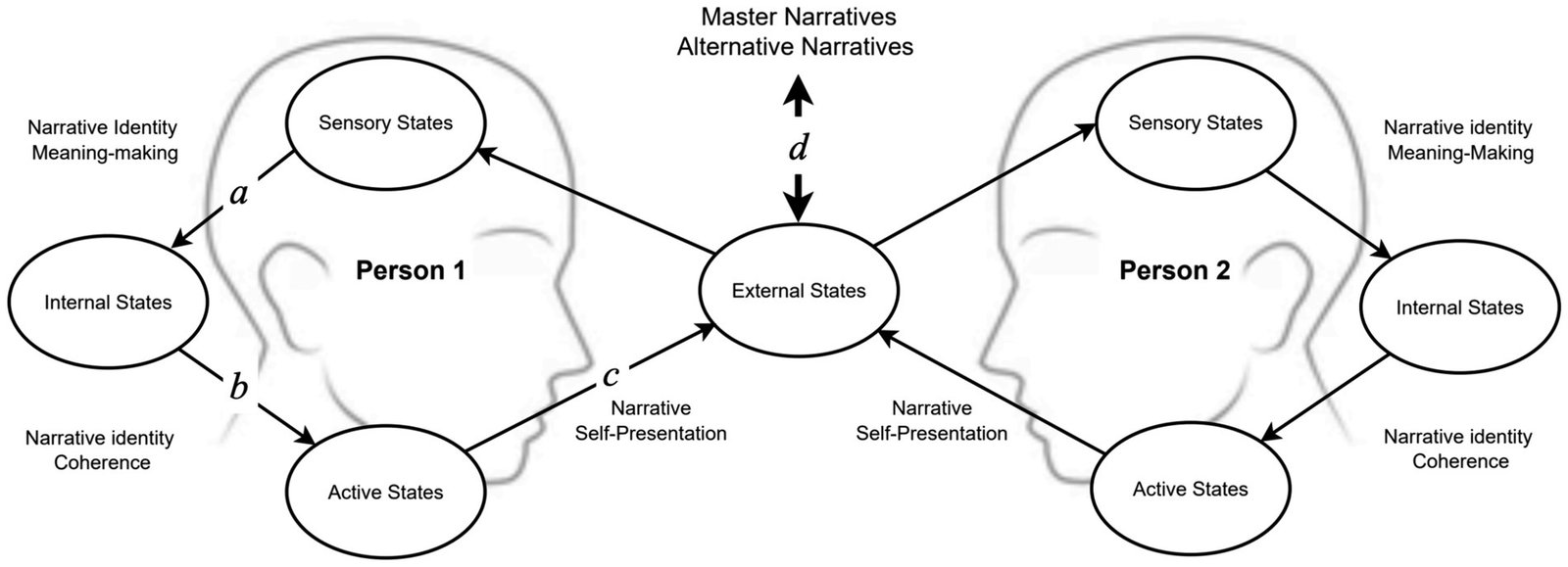
Flaw #3: Ignoring Jerome Bruner
Perhaps the most notable omission is Jerome Bruner, a cognitive psychologist who positioned narrative as a primary mode of human thought. In Actual Minds, Possible Worlds (1986), Bruner demonstrated that stories help us construct meaning, interpret social realities, and understand human intentions. Facts embedded in stories, he found, are 22 times more likely to be remembered, emphasizing storytelling’s cognitive efficiency. Bruner also highlighted the “narrative construction of reality,” where storytelling organizes memory and social experience, shaping 70–80% of social explanations rather than relying solely on empirical verification.
Flaw #4: Overlooking Storytelling in Leadership and Business
Finally, Fletcher’s focus on philosophy and neuroscience leaves little discussion of storytelling in leadership or management. This is a missed opportunity, as research shows that business narratives can improve performance by 20–30%, demonstrating that storythinking is highly relevant to practical, real-world scenarios.
The Enduring Value of Storythinking
Despite these gaps, Fletcher’s work is a valuable addition to the growing literature on narrative cognition. It reinforces the notion that The Surprising Influence of Narrative on Human Thought and Behavior is profound: stories shape how we think, act, and innovate, guiding humans to adapt and create value in ways that purely analytical thinking cannot. Recognizing the power of narrative is essential—not just for writers or philosophers, but for anyone who seeks to understand the mechanisms behind human thought and action.