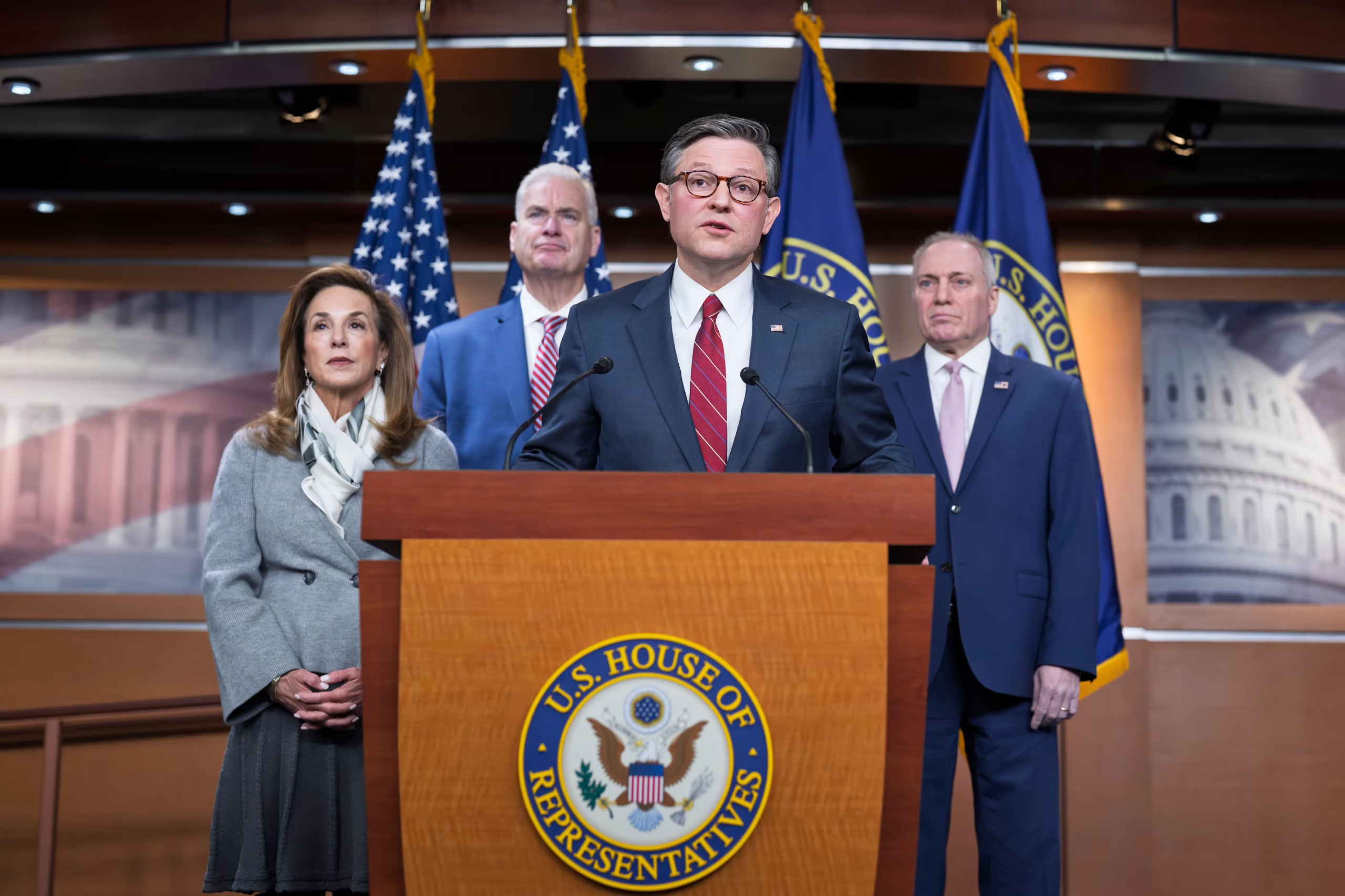
Public opinion is increasingly turning against the Trump administration’s aggressive immigration policies, reshaping the political landscape in Washington. Trump Backlash Energizes Democrats on DHS and ICE as Partial Shutdown Threat Nears, as Democratic lawmakers take a firmer stance against approving another short-term funding measure for the Department of Homeland Security (DHS).
With funding set to expire in just a few days, several key Senate Democrats say they will not support a continuing resolution (CR) to keep DHS operating, raising the possibility of a partial shutdown.
Democrats Draw a Hard Line
Sen. Angus King of Maine made clear that concerns over Immigration and Customs Enforcement (ICE) operations are driving his position.
“What ICE is doing is unacceptable, and it needs to be brought under control,” King said, adding that supporting continued funding without changes would make him feel complicit.
King’s stance carries weight. He previously sided with Republicans to reopen the government after a major shutdown and has often been a crucial vote in clearing the Senate’s 60-vote threshold. This time, however, he argues the circumstances are different.
According to King, about 96% of federal agencies already have funding in place. A DHS shutdown would affect services such as ICE, the Transportation Security Administration (TSA), the Coast Guard, and FEMA, but would not impact broader programs like food assistance, medical services, or research funding that were at risk during earlier funding fights.
Calls for Reform Before Funding
Sen. Chris Murphy of Connecticut, the top Democrat on the Senate Appropriations subcommittee overseeing DHS funding, said he sees little appetite for another temporary fix.
Murphy argued that Congress could resolve the issue quickly if Republicans were willing to negotiate reforms. He also warned that continuing to fund the agency without oversight changes could have serious consequences, saying lawmakers are increasingly concerned about accountability within DHS and ICE.
Public Opinion Shifts
Recent polling suggests the political pressure Democrats are responding to reflects broader public sentiment.
A late-January NPR/PBS/Marist survey found that only 34% of registered voters approve of ICE’s performance, while 61% disapprove. The poll also showed that 65% believe the agency has gone too far and 62% think its actions are making the country less safe.
Similarly, a Quinnipiac University poll reported that 59% of voters disapprove of President Donald Trump’s handling of immigration, and 63% view ICE negatively.
The shift has not gone unnoticed by the administration. In a recent interview, Trump acknowledged that his team may need to adopt a “softer touch” in immigration enforcement following high-profile incidents.
Democratic Demands and Negotiations
Democratic leaders have outlined 10 proposed changes to DHS and ICE policies. Among them are requirements for judicial warrants before entering private property and mandatory identification for agents during operations.
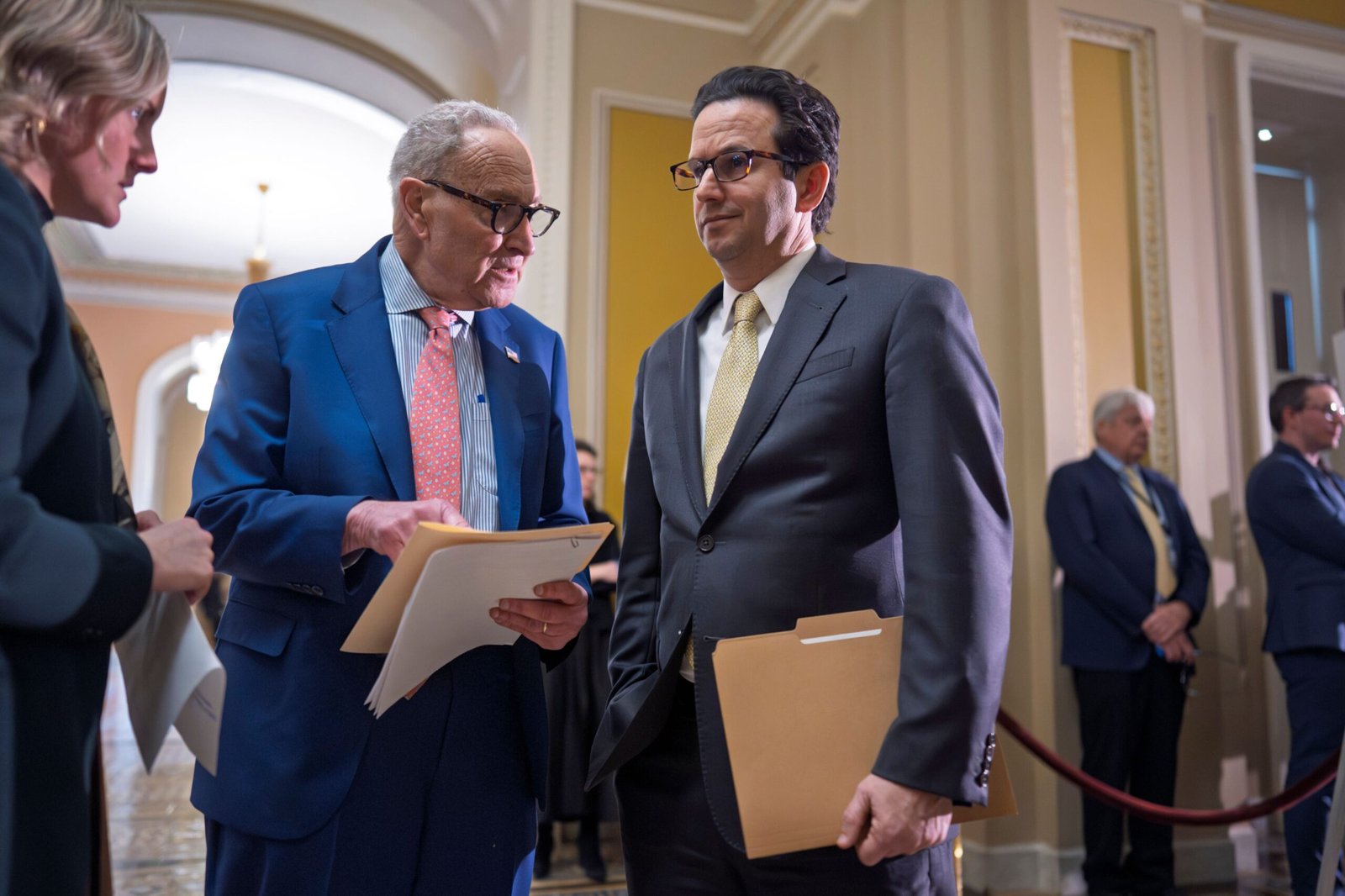
Senate Minority Leader Chuck Schumer said legislative language outlining these proposals has already been sent to the White House and Republican leaders.
Schumer argued that the reforms are modest and aligned with standard law enforcement practices, emphasizing transparency and accountability. He also warned that time is running short to reach an agreement.
Republican Leverage and White House Strategy
Republicans maintain some negotiating power. ICE previously received $75 billion through a major funding package, allowing many immigration operations to continue even if DHS funding temporarily lapses.
A senior administration official said discussions with Democrats are ongoing and that no options have been ruled out. The White House is also preparing messaging that would blame Democrats if a shutdown disrupts critical services, including disaster response.
Officials noted that bipartisan talks are continuing and that direct involvement from the president remains possible if negotiations stall.
Uncertain Path Forward
Senate Majority Leader John Thune said the administration and Democrats must resolve their differences in the coming days. While some Democratic proposals could serve as a starting point, he said others would unnecessarily limit law enforcement authority.
Some Republicans remain skeptical that a compromise will come quickly. Sen. John Kennedy suggested that, after prolonged negotiations, Congress may ultimately pass a “clean” continuing resolution that maintains current funding levels, arguing that Democrats will want to avoid being blamed for disruptions affecting FEMA, TSA, or the Coast Guard.
For now, the clock is ticking, and the outcome remains uncertain as both parties weigh political pressure, public opinion, and the risks of a partial shutdown.