

The political relationship between the United States and Venezuela has been tense for years, but it reached a boiling point during the presidency of Donald Trump. His administration adopted a confrontational approach aimed at weakening the grip of Nicolás Maduro over Venezuela. This strategy, often described as bold, punitive, and uncompromising, reshaped regional diplomacy and sparked global debate.
This article breaks down the origins, methods, and consequences of bold trump pressure on maduro venezuela, explaining why it mattered and what it changed.
Background: Why Venezuela Became a U.S. Priority
Venezuela was once one of Latin America’s wealthiest nations, largely due to its massive oil reserves. However, years of economic mismanagement, corruption, and authoritarian governance led to hyperinflation, food shortages, and mass migration.
When Nicolás Maduro succeeded Hugo Chávez, critics accused his government of rigging elections, silencing opposition voices, and dismantling democratic institutions. These accusations prompted the United States and several allies to refuse recognition of Maduro’s leadership, setting the stage for intensified trump pressure on maduro venezuela.
The Core of Trump’s Venezuela Policy
Donald Trump’s policy toward Venezuela rested on a belief that strong economic and diplomatic pressure could force political change. Unlike previous administrations that relied heavily on dialogue, Trump’s team emphasized maximum pressure.
Key pillars of this approach included:
-
Economic sanctions
-
Diplomatic isolation
-
Support for opposition leadership
-
Open threats of further action
This strategy was designed to isolate Maduro internationally while encouraging internal resistance.
Economic Sanctions: The Primary Weapon
The most visible aspect of bold trump pressure on maduro venezuela was a sweeping sanctions regime. These measures targeted Venezuela’s oil industry, government officials, and state-owned enterprises.
Oil exports, the backbone of Venezuela’s economy, were severely restricted. The idea was simple: cut off revenue streams that funded Maduro’s government and military loyalty.
Supporters argued sanctions were necessary to stop corruption and human rights abuses. Critics, however, claimed they worsened living conditions for ordinary Venezuelans, deepening an already dire humanitarian crisis.
Diplomatic Isolation and Global Messaging
Trump’s administration worked aggressively to isolate Maduro on the world stage. The U.S. recognized opposition leader Juan Guaidó as Venezuela’s interim president and urged allies to do the same.
This diplomatic stance was meant to undermine Maduro’s legitimacy and send a clear message: the United States would not negotiate with what it considered an illegitimate regime. This hardline posture became a defining feature of trump pressure on maduro venezuela.
The Military Option: Rhetoric vs. Reality
One of the most controversial elements of Trump’s approach was his repeated assertion that “all options are on the table.” While no direct military intervention occurred, the rhetoric alone sent shockwaves through the region.
For Maduro, these statements were used to rally nationalist support and frame the U.S. as an imperial threat. For Trump’s supporters, the tough talk signaled strength and deterrence.
Impact on Venezuela’s Economy and Society
There is no denying that Venezuela’s economy continued to collapse under mounting pressure. Inflation soared, basic goods became scarce, and millions fled the country in search of stability.
Whether these outcomes were a direct result of trump pressure on maduro venezuela or the culmination of years of mismanagement remains a point of fierce debate. What is clear is that sanctions intensified existing problems rather than resolving them quickly.
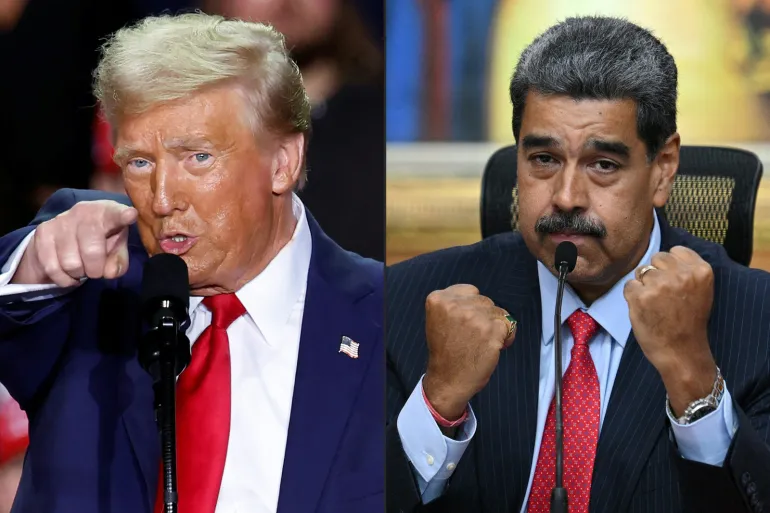
International Reactions and Divided Opinions
Globally, Trump’s Venezuela strategy drew mixed reactions. Some Latin American governments supported U.S. actions, seeing Maduro as a destabilizing force. Others criticized Washington for interfering in another nation’s sovereignty.
Human rights organizations also expressed concern, warning that economic sanctions often hurt civilians more than political elites.
Did Trump’s Pressure Work?
The central question remains unanswered: did bold trump pressure on maduro venezuela achieve its goal?
Maduro remained in power throughout Trump’s presidency, suggesting that maximum pressure alone was insufficient to trigger regime change. However, the strategy did weaken Venezuela’s economy further and forced international attention onto the crisis.
Supporters argue it exposed the failures of Maduro’s leadership. Critics counter that it hardened the regime and closed off diplomatic solutions.
Conclusion: A Policy That Redefined U.S.–Venezuela Relations
Trump’s aggressive stance toward Venezuela marked one of the toughest foreign policy approaches the U.S. has taken in Latin America in decades. Through sanctions, diplomatic isolation, and relentless rhetoric, trump pressure on maduro venezuela reshaped global perceptions of the crisis.

