As news tickers last weekend filled with breathless updates about Donald Trump’s renewed push for influence over Venezuela’s oil industry, it is easy to imagine Vladimir Putin pacing the Kremlin halls, doing quiet calculations about crude prices. For Moscow, oil has long been the backbone of state finances—far more critical than gas exports to Europe—and any prospect of a global price drop immediately raises alarm bells.
For decades, oil revenues have underwritten Russia’s budgets, social spending, and military ambitions. The idea that US involvement could revive Venezuela’s moribund oil sector, flooding the market with additional barrels, has therefore unsettled policymakers in Moscow. Venezuela sits atop the world’s largest proven reserves, and even a partial recovery could push prices down, directly squeezing Russian income.
Analysts disagree on how fast Venezuela can realistically ramp up production. Some believe the country could add millions of barrels per day within months, while others point to decaying infrastructure and chronic mismanagement as obstacles. Still, the mere possibility has sharpened fears in Russia, especially given existing pressures. Sanctions imposed last year on energy giants such as Rosneft and Lukoil, combined with a stronger rouble that reduces dollar-denominated earnings, have already eaten into oil receipts.
The Case for Collapse—and Why It Falls Short
Optimists in the West argue that Russia is increasingly exposed after years of war in Ukraine. They claim the economy is fragile, propped up only by high oil prices and extraordinary state spending. In this view, a sustained fall in crude prices would deal a devastating blow, undermining the Kremlin’s ability to finance the war and weakening domestic support.
This narrative portrays Russia as an economic house of cards, vulnerable to the right gust of pressure. Growth has indeed slowed sharply as the government moved to curb inflation fueled by military spending. The International Monetary Fund forecasts modest growth of just 0.6% in 2025 and 1% in 2026. Interest rates hover near 20%, taxes are set to rise again, and unemployment has dropped to around 2%—a sign not of prosperity, but of acute labor shortages caused by conscription, demographic decline, and outward migration.
Household incomes, buoyed for a time by welfare payments, are now expected to stagnate. Budget cuts have shifted financial strain from the federal center to the regions, trimming pension spending and squeezing education. Business leaders complain that high rates and uncertainty leave little incentive to invest.
Some commentators point to Iran as a cautionary tale, where sanctions and military pressure have crippled the economy, triggering shortages and unrest. They ask whether Russia could face a similar fate if sanctions tighten further and oil prices slide.
Sanctions, Shipping, and Structural Adaptation
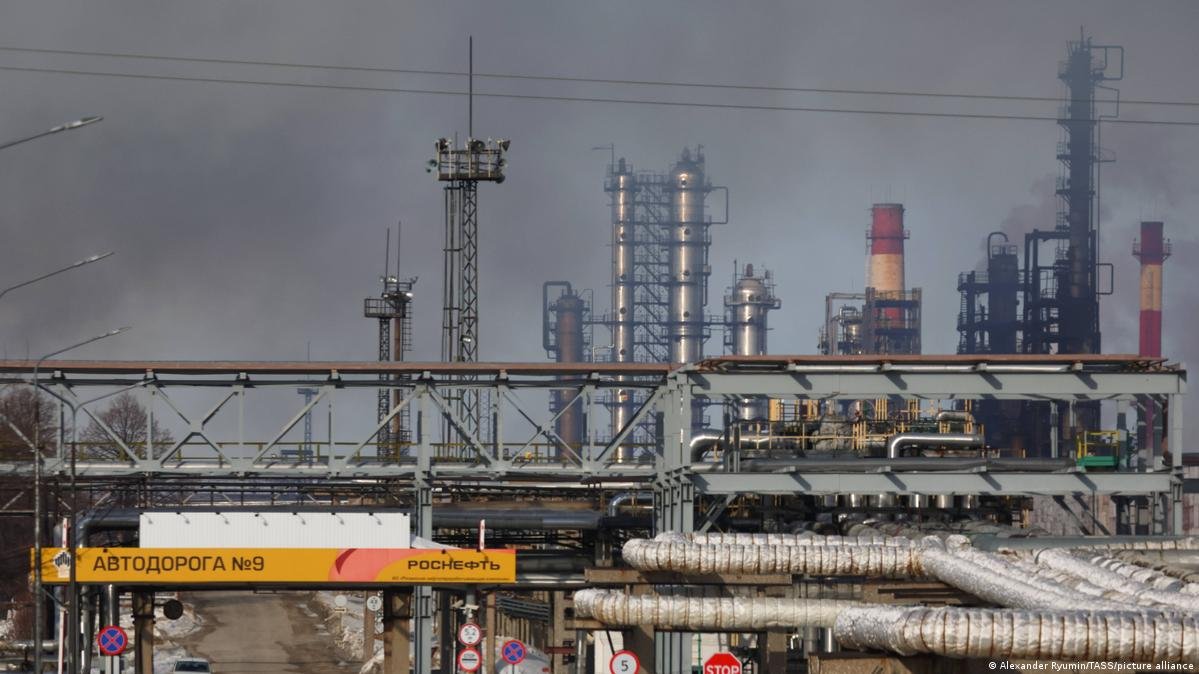
Western policymakers continue to explore ways to increase pressure. Economists meeting recently in Washington examined how more dynamic sanctions might further degrade Russia’s war economy. Since 2022, Moscow has assembled a vast “shadow fleet” of aging tankers to move oil to buyers such as India and Turkey. That fleet has since shrunk, forcing greater reliance on European-insured vessels—a potential vulnerability if financial hubs like London take a harder line.
Yet focusing solely on these levers misses a crucial point. The Kremlin has quietly but effectively reengineered the domestic economy. While its military strategy stumbled early in the war, its financial management has been far more disciplined. Russia can certainly be hurt by tougher sanctions, but it is not on the brink of implosion.
Economic growth today resembles a medically induced coma: deliberately suppressed to contain inflation and shield the system from external shocks. Oil revenues now account for roughly a quarter of state income, down from about half, but the gap has been filled through higher taxes on households and businesses.
As analyst Richard Connolly notes, the Kremlin has successfully framed the conflict not as a war with Ukraine, but as a confrontation with the West itself. Sanctions, while painful, have not yet become decisive in shaping Moscow’s strategic choices.
Why Russia Can Still Hold On
Russia’s macroeconomic indicators remain surprisingly resilient. Public debt sits below 20% of GDP, and the budget deficit is projected at around 3.5%—figures that look modest compared with many Western economies. Inflation, which spiked after the invasion, has eased toward 6%, only slightly above the central bank’s target.
There is no denying that Putin is running down the country’s long-term potential, turning parts of the industrial base into an aging, inefficient shell. The economy is being milked to sustain the war effort with little regard for the future. But in the short term—this year and possibly next—Russia retains enough fiscal room to keep going.
China continues to buy Russian oil, North Korea supplies manpower and equipment, and even if India and others pull back under tougher sanctions, Moscow has buffers. Ukraine, by contrast, has funding secured for roughly 18 to 24 months following major EU commitments. Both sides, for now, have the means to continue.
Recent missile strikes underscore the grim reality: economic pressure alone will not end the war quickly. Europe must tighten trade restrictions where possible, but also accept a hard truth captured by Why Russia’s economy may survive even if oil prices decline—the system has been adapted to endure pain.
Four years of relatively weak sanctions gave the Kremlin time to adjust. A tougher stance may not cause an immediate economic collapse, but it remains one of the few tools available. Used alongside sustained military support for Ukraine, it may yet help bring the conflict to an end.